
MCPE
Magyar Coaching Pszichológiai Egyesület
Coaching psychology in business and in society
Leadership development beyond competencies
Collaborative dialogue · practical wisdom · sustainable effectiveness
Friday, 9 October 2026 · 14:00–18:00
CEU Nádor Event Center · Nádor utca 15, 1051 Budapest, Hungary
Organizers: Coaching Psychology Section of the Hungarian Psychological Association (MPT) · Hungarian Association for Coaching Psychology (MCPE)
Supporters: International Society for Coaching Psychology (ISCP) · Department of Organizational and Leadership Psychology, ELTE Faculty of Education and Psychology
Please note: the opening video message and the keynote are delivered in English; the rest of the conference is held in Hungarian, without interpretation.
Conference registration
Attendance requires registration and places are limited. The morning workshop requires separate registration.
Change in organizations and in society has become more dynamic and more complex, confronting leaders with dilemmas that appear unsolvable. Continuous learning and the acquisition of more competencies are no longer enough. Leaders must be able to navigate uncertainty, interpret events constructively, and make decisions that serve both people’s well-being and the organization’s long-term effectiveness. At best, the leader’s reading of a situation takes shape through a dialogue among different perspectives, and this shared meaning becomes the basis for their deliberation. In this sense, practical wisdom (phronesis)Practical wisdom in leadership is an integrative capability that enables a leader, in complex and uncertain situations, to interpret the essential dynamics of the situation with sensitivity and nuance; to recognize their own and others’ emotional states, values and perspectives; and to co-construct meaning with stakeholders through dialogue. This shared meaning-making provides the basis for decisions and actions that serve effectiveness appropriate to the situation, take account of stakeholders’ perspectives and wellbeing, and meet moral considerations. is the capacity to draw on that jointly constructed understanding in weighing what the situation calls for, and to do the right thing in the right way at the right time.
Practical wisdom rests on well-developed emotional self-regulation, a mature leader identity, and the relational sensitivity that enables genuine dialogue with stakeholders. These qualities can be developed only to a limited extent through conventional training or goal-oriented coaching — not because those methods are weak, but because they follow a different logic. Training generalizes: it teaches rules, models, and techniques. Practical wisdom, by contrast, is always the judgment of a particular situation and can be practiced only by thinking through real dilemmas.
The next era of leadership development therefore turns towards the quality of dialogue. This is where coaching psychology contributes, working with the very processes from which sound judgment emerges: helping leaders think clearly under pressure; making visible the readings that lie beyond their own perspective; clarifying the values that guide their decisions; and supporting the identity work from which mature leadership grows. These are psychological processes with research-based methodologies and measurable indicators. A leader who has experienced what mutual dialogue feels like can create the same with their own team: not only do they develop, but the way decisions are made around them changes too. This remains a human task even as analysis and decision preparation are increasingly carried out by artificial intelligence.
Coaching psychology has become an independent branch of academic and applied psychology, concerned with supporting performance, development and wellbeing within the frame of everyday, non-clinical functioning. Several approaches coexist within it; developing practical wisdom is one of them, and one made particularly timely by the nature of today’s leadership dilemmas. This is the first professional forum in Hungary to place that perspective at its center.
Our international keynote speaker, Prof. Dr. Reinhard Stelter (Copenhagen Business School), takes as his starting point the leadership implications of a hyper-complex social environment, under the title “Third-generation coaching: towards collaborative dialogues.” His approach does not replace earlier, goal-oriented coaching practice but adds a further layer to it, placing greater emphasis on identity, values and ethical reflection. In shared dialogue, the coach and their partner create moments of symmetry and develop new interpretations together. The approach draws on narrative-collaborative practice, positive psychology, and the philosophical tradition of value-based, protreptic dialogue — the same tradition from which the concept of practical wisdom originates. It is in this kind of dialogue that a leader develops the capacity to hold co-creative conversations with their own colleagues, and to become a dialogical leader.
The other presentations also explore the challenges of leadership development. They address the role of coaching psychology in managing workplace stress and building psychological capital; how the impact of leadership development and of coaching within it can be measured; current Hungarian practice in selecting leadership development professionals; and the opportunities and risks of integrating artificial intelligence into coaching. The interactive “wisdom lab” that closes the conference examines how deeper understanding and wiser action can emerge from attention, dialogue, and thinking together in the field of leadership development.
For corporate HRD and HR professionals: L&D specialists, organizational and leadership developers and business partners who wish to apply a new perspective and toolkit in leadership development in order to improve organizational performance and employee wellbeing.
| Time | Programme |
|---|---|
| 13:30–14:00 | Registration and arrival |
| 14:00–14:10 | Welcome |
| 14:10–14:20 | Opening address (pre-recorded video message, in English) Prof. Stephen Palmer, PhD — Honorary President, International Society for Coaching Psychology (ISCP) |
| 14:20–15:05 | Keynote (in English) Third generation coaching — towards collaborative dialogues Prof. Dr. Reinhard Stelter In response to rapid societal change, third generation coaching moves beyond earlier coaching practices, placing greater emphasis on identity, values and ethical reflection. On this basis the dialogue between coach and coachee shifts towards moments of symmetry, where the coach is present as a fellow human being and both parties create meaning together in the conversation. |
| 15:05–15:30 | Presentation (in Hungarian) Developing human capital through psychological life coaching at work Dr. Réka Bikfalvi Employees’ mental health is indispensable to effective work. A methodological and experiential summary drawn from the Nyugizóna employee support programmes: organisational life coaching, burnout prevention, and the flexible integration of the coach’s and the psychologist’s perspectives. |
| 15:30–15:55 | Presentation (in Hungarian) Coaching psychology in business — the perceived added value of coaching psychology in organisational practice Dr. Balázs Tamás Fekete On what basis does an HR leader decide who the organisation should work with? Findings from interviews with nine HR professionals and a questionnaire survey on the criteria of coach selection. One of the study’s key lessons is that while coaching psychology itself is largely unknown, psychological expertise carries distinctly positive professional, human and ethical associations. |
| 15:55–16:25 | Coffee break and networking |
| 16:25–16:50 | Presentation (in Hungarian) AI coaching — blessing or curse for coaching psychology? Bálint Mezőffy How does the use of AI affect the practical wisdom of leaders and coaches? The presentation examines the question through the most recent empirical research. Its aim is not a clear-cut verdict, but the exploration and joint discussion of the professional, ethical and business dilemmas involved. |
| 16:50–17:15 | Presentation (in Hungarian) A safe space with demonstrable impact — what and how can we measure in the coaching psychology process? Vince Székely, PhD The protected inner space of the coaching psychology process and the sponsor’s legitimate need for accountability are not mutually exclusive, but they can coexist only if we separate the measurement dimensions that practice usually conflates. The presentation addresses the challenges of measuring practical wisdom and argues that interpreting results is dialogical work rather than expert judgement. |
| 17:15–17:55 | HRD wisdom lab (in Hungarian) Zsuzsanna Lakatos and Kinga Surányi The conference closes not with a summary but with joint work. In small groups we work with familiar leadership development situations across three short rounds, each approaching them from a different angle. What happens in the third round we will reveal on the day. |
| 17:55–18:00 | Closing remarks |
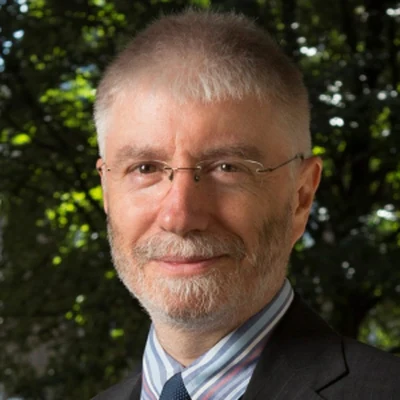
Prof. Stephen Palmer, PhD
Opening address
President and Honorary President of the International Society for Coaching Psychology (ISCP) and Co-ordinating Director of the ISCP International Centre for Coaching Psychology Research. A chartered coaching psychologist and Adjunct Professor of Coaching Psychology at Aalborg University, Denmark. He has written or edited some sixty books, including the Handbook of Coaching Psychology (Routledge, 2nd Edition, 2019), and is one of the founding figures of coaching psychology as a discipline.
stephenpalmer.uk

Prof. Dr. Reinhard Stelter
Keynote
Holds a PhD in psychology and is Professor Emeritus of Coaching Psychology at the University of Copenhagen, visiting professor at the Copenhagen Business School (Master of Public Governance) and an accredited coaching psychologist (ISCP), supervisor and leadership developer in private practice. He is Honorary Vice-President of the International Society for Coaching Psychology and a former member of the Scientific Advisory Council of the Institute of Coaching, associated with Harvard Medical School. His major English-language publications are Third Generation Coaching — a Guide to Narrative-Collaborative Theory and Practice (Springer, 2014) and The Art of Dialogue in Coaching (Routledge, 2019), named Coaching Book of the Year 2019 by Henley Business School.
nexs.ku.dk/coaching

Dr. Réka Bikfalvi
Presentation
Health promotion specialist psychologist, coaching psychologist, focusing trainer, mediator and pharmacist; managing director of Nyugizóna Ltd. and founder of the Nyugi Foundation. She developed comprehensive solutions for preventing workplace burnout together with her psychologist colleagues; for sixteen years they have jointly practiced and refined their workplace health promotion methodology and the practical applications of organizational life coaching. In her own practice she works primarily with leaders.
nyugizona.hu
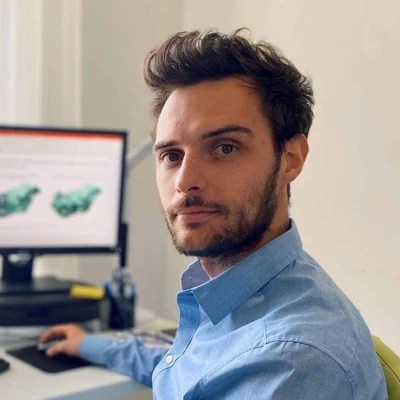
Dr. Balázs Tamás Fekete
Presentation
Psychologist, specialist psychologist in organizational and business coaching psychology, research expert at E.ON Hungária Plc. and lecturer at Pázmány Péter Catholic University. His research and professional interests center on leadership decision-making, behavioral economics, and leadership and organizational development.

Bálint Mezőffy
Presentation
Coaching psychologist and executive coach with fifteen years of experience in large-corporate leadership development. Co-chair of the Coaching Psychology Section of the Hungarian Psychological Association. He primarily supports middle and senior managers in business settings through group, team, and individual coaching. Since 2017, he has been a lecturer on the business coach program at ELTE Faculty of Education and Psychology.
mezoffybalint.com
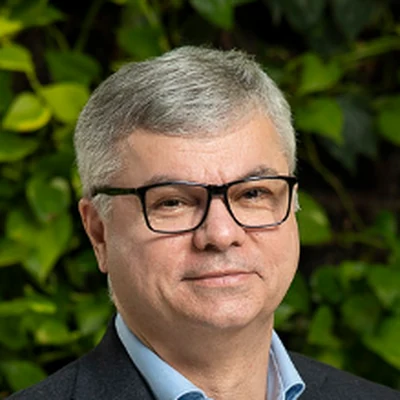
Vince Székely, PhD
Presentation
Coaching psychologist, President of the Hungarian Association for Coaching Psychology, founder and co-chair of the Coaching Psychology Section of the Hungarian Psychological Association, and Honorary Vice-President of the ISCP. He has worked in this field for over twenty years and has trained more than 250 coaches and coaching psychologists. His recent work focuses on developing the professional infrastructure of coaching psychology in Hungary: its certification system, competency framework and code of ethics. His research examines the leader’s identity work in coaching.
szekelyvince.hu

Zsuzsanna Lakatos
HRD wisdom lab
Coaching psychologist and focusing-oriented therapist. She has practiced in the helping professions for over fifteen years and has taught coaching psychology in university settings for seven years. Her professional work centers on integrating the theoretical foundations and practical methodology of coaching psychology, with particular attention to combining the coaching psychology perspective with the embodied, in-depth self-knowledge methods of focusing. Her earlier experience in personnel development and HR gives her a broad perspective.

Kinga Surányi
HRD wisdom lab
Occupational and organizational psychologist, coaching psychologist, leadership developer, and supervisor. For more than twenty years, she has worked in individual and organizational development, supporting leaders and professionals and training and supervising coaching psychologists. Her professional interests center on the deeper processes of growth and change: the development of leader identity, psychological safety, holding relationships, and the possibilities of transformative coaching. Her approach is integrative, never separating personal development from its relational and organizational context. She believes real development happens when a person feels both safe and challenged – and has room to let go of who they have been until now.
soltiandpartners.com
| Full-price ticket | HUF 17,000 + VAT |
| Early Bird (until 9 September 2026) | HUF 12,000 + VAT |
| MCPE members | free of charge |
The prices shown are net amounts; VAT is not included. The registration fee covers attendance at the full half-day conference, all presentations, the coffee break and access to the conference materials.
Right to amend the programme. The programme is provisional. The organisers reserve the right to modify the programme, the speakers and the schedule. Registered participants will be notified by email of any significant change.
Registration. Attendance requires registration. Applications are processed in order of arrival and we confirm acceptance by email. The confirmation message also contains the payment details.
Registration deadline: 2 October 2026, or until places are filled.
Language. The opening video message and the keynote are in English. The remainder of the conference is held in Hungarian. Interpretation is not available.
Venue. CEU Nádor Event Center, Nádor utca 15, 1051 Budapest. Centrally located and easily reached by public transport.
Questions? konferencia@coachingpszichologia.hu
On the morning of the conference we are holding a hands-on workshop with Prof. Dr. Reinhard Stelter entitled Towards collaborative dialogues in coaching (09:30–12:30, in English, without interpretation, limited to 25 places).
The workshop is intended for practising coaching psychologists and coaches: it builds on hands-on coaching experience and closes with a live demonstration involving all participants.
Conference registration
Attendance requires registration and places are limited. The morning workshop requires separate registration.